1966
I'm glad I opened your eyes
1966
I'm glad I opened your eyes
January 5, 1966: Bill Wyman
produces a recording session in London for Ian Stewart,
where Bill, Stu and Keith
Richards record the song Stu-Ball.
January 1966: Mick holds a
party in his apartment where the group attends, along with
John Lennon, George
Harrison and Ringo Starr.
January 20, 1966: The
Rolling Stones perform on British TV's Top of the Pops.
February 3-6, 1966: The
Rolling Stones perform again on British TV's Top of the
Pops, as well as on
the Eamonn
Andrews
Show.
 February 4, 1966:
The Rolling Stones' single 19th Nervous Breakdown is
released in the UK. (Released in the
U.S. on February 12.)
February 4, 1966:
The Rolling Stones' single 19th Nervous Breakdown is
released in the UK. (Released in the
U.S. on February 12.)
| Mick Jagger (1966): Pills and
breakdowns
(I get inspiration from t)hings that are happening around me - everyday life as I see it. People say I'm always singing about pills and breakdowns, therefore I must be an addict - this is ridiculous. Some people are so narrow-minded they won't admit to themselves that this really does happen to other people beside pop stars. |
February 8, 1966: Keith
Richards fails his test for a driving licence.
February 13, 1966: From
New York City, the Rolling Stones appear on The Ed
Sullivan Show for the
third
time.
February 16, 1966: The
Rolling Stones arrive in Sydney, Australia, for their second
Australasian tour
and
hold a press conference at the airport.
February 17, 1966: The
Rolling Stones tape an appearance on Australian TV's Bandstand
Special.
February 18-26, 1966: The
Rolling Stones perform concerts in Sydney, Brisbane,
Adelaide and
Melbourne.
February 27-March 1,
1966: The Rolling Stones perform concerts in New Zealand, in
Wellington and
Auckland.
March 2, 1966: The
Rolling Stones end their second down under tour by
performing in Perth, Australia.
March 3-5, 1966: Mick Jagger,
Keith Richards and Charlie and Shirley Watts spend time in
Fiji. Brian Jones and
Bill
Wyman hang out in Los Angeles.
March 6-9, 1966: At RCA
Studios in Los Angeles, the Rolling Stones continue and
conclude their
recording sessions for Aftermath, as well as for their next
single Paint It Black. Under My Thumb,
Lady
Jane, Out of Time, Stupid Girl and High
and Dry are recorded among others.
| Keith Richards (1966): "Paint It
Black"
We were in Fiji for about 3 days... They make sitars and all sorts of Indian stuff. Sitars are made out of watermelons or pumpkins or something smashed so they go hard. They're very brittle and you have to be careful how you handle them. Brian's cracked his already. And we had the sitars, we thought we'd try them out in the studio. To get the right sound on Paint It Black we found the sitar fitted perfectly. We tried a guitar but you can't bend it enough. |
| Keith Richards & Mick Jagger:
"Under My Thumb" and the girl put-down songs
Keith: Songs like Under My Thumb and Stupid Girl were all a spin-off from our environment... hotels, and too many dumb chicks. Not all dumb, not by any means, but that's how one got. (Brian) was still fantastic making records, because he was so versatile. I mean, he'd have marimbas - which is why you have marimbas on Under My Thumb - or dulcimer, sitar. He kind of lost interest in guitar, in a way. But at the same time he added all of that other color, those other instruments and other ideas. He was an incredibly inventive musician. Mick: There was one song that was particularly chosen as an anti-women thing, which was Under My Thumb. And actually Under My Thumb - how does it go... (sings) Under my thumb, there's a girl who once had ME down. So the whole idea was that she - that I was under HER, she was kicking ME around. So the whole idea is absurd, all I did was turn the tables around. So women took that to be... against femininity where in reality it was... trying to "get back", you know, against being a "repressed male". (Pause) This was a long time ago (laughs).... |
| Charlie Watts, Ian Stewart, Keith
Richards, Bill Wyman & Mick Jagger: Brian Jones
vs. The Glimmer Twins
Charlie: In a way I suppose Brian resented Mick and Keith being sonwriters. Physically and in every other way Brian wasn's strong enough to take control. He was a very clever musician but he didn't stay with anything long enough to prove himself a GREAT musician. He'd play something for three weeks and then never again. Ian: Songwriting caused a lot of bitterness. But there again Brian could not write songs. He's a little bit like Bill in that respect - writing nice little songs that are all right by themselves but not in the Rolling Stones' style. Brian's attempts at writing were really awful and pretty grim. Keith: Mick and I being songwriters affected Brian a lot. It took Brian a long time to come to terms with that because it was very early on. After that he never reagained any sort of status. He lost more and more interest as he went along. It got to the point where we were going in the stdio and Brian had to play or learn a song that Mick and I had written. That would bring him down more and more. Brian's only solution became clinging to either Mick or me, which created a triangle of sorts. It was like Brian's open wound. Eventually, though, he became a sort of laughingstock to the rest of the band. Bill: Charlie and I were all right 'cause we're fairly easygoing, but for Brian it really threw him. Brian was lost. He wasn't even singing backup vocals like he used to. He got confused over what his purpose in the band was. So he started to practice less and get drunk more. He really couldn't handle it, and just went from bad to worse over two or three years. It was difficult to break this cult thing and feel like we were all friends. The atmosphere was a bit strange, a little tense. There would be in jokes that you didn't know about. I went through a period that lasted several years where I was the scapegoat for funny remarks and sarcastic comments. I didn't like it very much. Then suddenly Brian became the one that wasn't liked. I was OK then, back amongst the pluses and Brian was in the minuses. In those days it was a bit vicious. Mick: We really were vicious. In the beginning if anyone was the slightest bit flaky in a recording sesion, they were really in for a hard time. When you're young you put the knife in. Brian couldn't even be botherered turning up for sessions. There's only so much you can do. |
Mid-March 1966: Brian Jones
spends time with Andrew Oldham in New York City. While in
New York, Brian
catches the Velvet Underground perform at the
Paraphernalia, as part of Andy Warhol's touring
multi-media
spectacular Exploding Plastic Inevitable show.
Meanwhile, Keith Richards purchases the house Redlands in
West
Wittering, Sussex.
March 26, 1966: The
Rolling Stones arrive in Amsterdam in the Netherlands for a
European tour. They
perform
in Den Bosch, near The Hague, for the first time.
March 27-29, 1966: The
Rolling Stones perform in Belgium, Brussels and Paris,
France. The group
meets
Brigitte Bardot in Paris.
March 30-31, 1966: The
Rolling Stones perform for the first time in Marseille and
Lyon in France. In
Marseille, Mick Jagger is hit with a piece of wood over the
eye while performing, and requires
hospitalization and stitches.
April 1-2, 1966: Mick Jagger,
Keith Richards and Charlie Watts spend time in England,
with Mick attending a
recording session by The Troggs. Bill Wyman, Brian Jones
and Anita Pallenberg spend time in Paris; Bill
Wyman
and Brian Jones attend the taping of a special Ready,
Steady, Go! edition at Paris TV studios
featuring The Who and The Yardbirds.
 April 2, 1966:
The Rolling Stones' first greatest hits compilation album, Big
Hits (High Tide and Green Grass), is released in the
U.S.
April 2, 1966:
The Rolling Stones' first greatest hits compilation album, Big
Hits (High Tide and Green Grass), is released in the
U.S.
April 3-5, 1966: The
Rolling Stones end their brief European tour with concerts
in Stockholm, Sweden
and
Copenhagen, Denmark.
April 14, 1966: The
Rolling Stones perform in London for British TV's Top of
the Pops.
 April 15, 1966:
The Rolling Stones' fourth U.K. album, Aftermath, is released.
April 15, 1966:
The Rolling Stones' fourth U.K. album, Aftermath, is released.
April 15-30, 1966: The group
enjoys time off. Mick Jagger and Chrissie Shrimpton, Brian
Jones and
Anita
Pallenberg spend time in Dublin, Ireland. Bill Wyman and
his family vacation in Scandinavia.
April 18, 1966:
Seventeen-year-old Mick Taylor substitutes for an absent
Eric Clapton at a concert by
John Mayall &
the bluesbreakers in Welwyn Garden City in England.
May 1, 1966: For the third year in a row, the Rolling Stones
perform at the New Musical Express'
Poll-Winners Concert at the Empire Pool in Wembley,
London. They share the bill with the Who,
the
Yardbirds and other artists, and for the last time with the
Beatles.
May 4, 1966: Anita Pallenberg
moves in with Brian Jones.
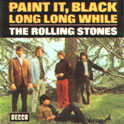 May 7, 1966: The
Rolling Stones' single Paint It Black is released.
May 7, 1966: The
Rolling Stones' single Paint It Black is released.
May 8-12, 1966: The
Rolling Stones appear for the last time on British TV's Thank
Your Lucky Stars,
and
perform as well on Top of the Pops.
May 15-25, 1966: Brian Jones
spends time in Marbella, Spain; Bill Wyman and his family
spend time in Majorca,
Spain.
May 16, 1966: Mick Jagger and
Andrew Oldham visit Beach Boy Bruce Johnston at his hotel
room in London,
England where they are played the just-released Pet
Sounds album.
May 26, 1966: The Rolling
Stones and girlfriends/wives attend Bob Dylan's concert at
the Royal Albert Hall in
London.
May 27, 1966: The Rolling
Stones perform on British TV's Ready, Steady, Go - Live.
June 1, 1966: Brian Jones
joins the Beatles in their recording of Yellow
Submarine at EMI Studios in London.
June 2, 1966: Keith Richards
attends the premiere of the Roman Polanski film Cul-de-sac
at the Cameo-Poly in
London, England.
June 8, 1966: Mick Jagger
collapses from exhaustion and is ordered rest. He moves
into a new apartment near
Regents Park, London.
June 23, 1966: The
Rolling Stones arrive in New York City for their fifth North
American tour, their
last of
the teenybopper era.
June 24, 1966: The
Rolling Stones hold a press conference aboard a yacht in New
York City, spend
time
afterward with Bob Dylan at a recording studio, then start
their tour with their first ever
performance at Manning Bowl in Lynn, Massachusetts.
| Mick Jagger (1966): Vietnam
Vietnam has changed America. It has divided and made people think. There's a lot of opposition - much more than you think, because all the opposition is laughed at in American magazines. It's made to look ridiculous. But there is real opposition. Before, Americans used to accept everything, my country right or wrong. But now a lot of people are saying my country should be right, not wrong. |
June 25-July 10, 1966:
The Rolling Stones tour the Atlantic coast and Ohio
Valley/Great Lakes
region
of the United States and Canada. The group performs in
arenas and stadiums in Cleveland,
Pittsburgh, Washington DC, Baltimore, Toronto, Montreal, New
York City, Syracuse, Detroit and
Chicago. They also appear for the first time in Hartford,
Connecticut; Buffalo, New York; Atlantic
City
and Asbury Park, New Jersey; Virginia (Virginia Beach); and
Indianapolis, Indiana.
| Mick Jagger (1966): Montreal
It was unbelievable (in Montreal). We've never seen anything like it before. I was disgusted. There were about 30 bouncers when we appeared - all of them huge blokes, wrestlers, I think. They were punching people for no reason at all and then throwing them out. One fight broke out at the front of the theatre while we were playing and 6 of the chaps set on one kid. It was terrible. It was going on in front of 12 000 people, too. In the end we stopped playing because the fans were booing and hissing and pointing at the bouncers. We joined in - and after the show, had to run for our lives because the wrestlers tried to get up on the stage after us. I was scared out of my life. I thought we were going to get it that time. |
 July 2, 1966: The
Rolling Stones' U.S. version of Aftermath, their sixth
North American studio album, is released.
July 2, 1966: The
Rolling Stones' U.S. version of Aftermath, their sixth
North American studio album, is released.
July 2, 1966: Following their
concert at New York City's Forest Hills Tennis Stadium,
the group witnesses
unknown Jimi Hendrix - calling himself Jimmy James -
performing at a club.
July 6, 1966: In Syracuse,
Brian Jones attracts controversy by allegedly dragging an
American flag across
the
floor.
July 11-15, 1966: The
Rolling Stones pursue their tour through central Canada and
the U.S.,
performing for the first time in Houston, Texas; Missouri
(St. Louis); Winnipeg, Canada; and again
in
Omaha, Nebraska.
| Keith Richards: A rapprochement with
Brian
To some extents the hatchets with Brian were buried on that ‘66 tour.... Brian brought Anita Pallenberg along half-way through somewhere in Texas. We were totally wrecked every day on real good Mexican grass. It was much easier to get along with Brian because we were all into the same thing. Mick too. This was like a rapprochement with Brian. Brian was very happy that everybody was getting along. We knew this was going to be our last American tour for a bit, so this was more of a celebration. |
July 16-18, 1966: The Rolling
Stones spend some days off from the tour relaxing in Los
Angeles.
July 19-26, 1966: The
Rolling Stones tour the western coast of North America,
appearing in
Vancouver, Seattle, Sacramento, Pheonix, Los Angeles (at the
Hollywood Bowl) and San
Francisco. The group also plays for the first time in Oregon
(Portland); Utah (Salt Lake City); and
Bakersfield, California.
| Tour manager Michael Gruber: Brian
and Anita on tour
One night at the Bel-Air in Los Angeles, Brian and Anita had to get off by beating the shit out of each other. He'd take a chair and bash it over her head. Cary Grant is in the next bungalow. He doesn't want to hear you fucking cunt and televisions being smashed over champagne and caviar. About 4 AM the manager came to my bungalow. He tells me one of our party is destroying their bungalow. I told him not to worry as we'd pay the damanges. When I go to Brian and Anita's bungalow it looked demolished, like a truck had ran through it. |
July 28, 1966: The
Rolling Stones end their 1966 North American Tour in
Honolulu, Hawaii, which
they
play for the first time.
July 29-August 2, 1966: The
Rolling Stones take more rest time in Los Angeles.
August 3-11, 1966: The
Rolling Stones start work on their next single and album at
RCA Studios in
Los
Angeles, including Let's Spend the Night Together
and Yesterday's Papers.
| Mick Jagger: "Yesterday's Papers"
Yesterday's Papers was the first song I ever wrote completely on my own for a Rolling Stones record. |
August 8, 1966: Brian Wilson
of the Beach Boys visits the Rolling Stones in the studio
in Los Angeles, where he
hears
the track My Obsession. The Stones then proceed to
get Wilson high on marijuana.
August 1966: Brian Jones and
Anita Pallenberg holiday in Morocco, Charlie and Shirley
Watts in Greece, Bill and
Diane
Wyman in Florida, Mick Jagger in Mexico and Keith Richards
in New York. Mick Jagger starts seeing
Marianne Faithfull.
August 31-September 2,
1966: At IBC Studios in London, the Rolling Stones continue
work for
the
most part on Have You Seen Your Mother, Baby, Standing
in the Shadow?.
September 1966: Brian Jones
starts work on the soundtrack for the German film A
Degree of Murder.
September 8-9, 1966: Mick
Jagger, Keith Richards and Andrew Oldham finish work on Have
You
Seen
Your Mother, Baby, Standing in the Shadow? at RCA
Studios in Los Angeles.
September 10-11, 1966:
The Rolling Stones are in New York City to shoot the cover
for their
next
single, film a promotional film clip and make their fourth
appearance on The Ed Sullivan Show.
Mid-September 1966: Brian
Jones and Anita Pallenberg move into a new apartment on
Courtfield Road in
London.
September 22, 1966: The
Rolling Stones rehearse in London for their British tour.
 September 23,
1966: The Rolling Stones' single Have You Seen Your
Mother, Baby, Standing in the Shadow! is released.
September 23,
1966: The Rolling Stones' single Have You Seen Your
Mother, Baby, Standing in the Shadow! is released.
| Mick Jagger: "Have You Seen Your
Mother?"
Have You Seen Your Mother? was like the ultimate freakout. We came to a full stop after that. I just couldn't make it with that anymore; what more could we say? We couldn't possibly have kept it up like that. You just drain out totally. Because it's just the end of a certain period and we just had to stop. |
September 23-October 9,
1966: The Rolling Stones undertake their 1966 Tour of
Great-Britain, what
would
be their last for over four years, with opening artists Ike
& Tina Turner and the Yardbirds
among
others. The group performs at the Royal Albert Hall in
London, then pursue with concerts in
northern England (Leeds, Liverpool, Manchester,
Stockon-on-Tees); Glasgow in Scotland;
Newcastle, Ipswich, Birmingham and Bristol in northern and
central England; Cardiff in Wales; and
Southampton in southern England.
| Mick Jagger, Brian Jones & Keith
Richards: The Fall 1966 Tour and a new generation
Mick: It's good to be touring again. When we toured last time, we'd done so much we had become blasé about it. But we haven't toured Britain for a year now, so it's fresh again. I'm very surprised at the fans - I thought they'd be older but they seem as young as ever. I never expected this sort of reception. It's a knockout. Brian: A new generation came to see us on tour with Ike and Tina Turner. Youngsters who had never seen us before, from the age of about 12, were turning up at the concerts. It was like it was three years ago, when the excitement was all new. Keith: The tour has been an enormous success because it's brought the young people back again. In the It's All Over Now era, we were getting adults filling up half the theatre and it was getting all draggy. We were in danger of becoming respectable! But now the new wave has arrived, rushing the stage just like old times. |
October 4-5, 1966: The
Rolling Stones make their last appearance on British TV's Ready,
Steady,
Go,
and also perform on Top of the Pops.
October 1966: Marianne
Faithfull separates from her husband John Dunbar to
continue her relationship with
Mick
Jagger.
Mid-October 1966: Mick
Jagger and Keith Richards work on recordings of the British
tour with Glyn
Johns
in London for a live album, attended also by other members
of the group.
| Bill Wyman: Got Live If You Want It
Got Live we recorded on 4-track. Some of the vocals were overdubbed later and some of the guitars, too. I remember Mick and keith going into the studio a few times on that one. Charlie and I didn't do any studio stuff so the rhythm section is pretty much from our concerts. Plus there are two studio cuts, of course, Fortune Teller and I've Been Loving You Too Long with audience tracks overdubbed on them. Don't forget in those days we didn't do very long shows, we used to play 25 minutes at the most if you or we were lucky. Kids would get onstage, attack me, attack Brian, Charlie, Mick and Keith. So you would ahve the guitar go out for twenty seconds, drums, etc., half a minute where you would lose the bass or drums completely. Out of six shows you would be lucky to get together a full set LP. |
October 1966: Brian Jones and
Anita Pallenberg holiday in Paris, France.
October 1966: Ron Wood joins
some of the Small Faces for a party at Mick Jagger's, with
Marianne Faithfull.
Early November 1966: Brian
Jones joins Anita Pallenberg in Munich, West Germany, who
is shooting A Degree
of
Murder.
 November 4, 1966:
The Rolling Stones' compilation album Big Hits (High Tide
and Green Grass) is released in the UK.
November 4, 1966:
The Rolling Stones' compilation album Big Hits (High Tide
and Green Grass) is released in the UK.
November 14, 1966: The
Rolling Stones shoot the album cover for the Between The
Buttons LP.
Late November 1966: The
Rolling Stones shoot promotional film clips in London for
their next single.
| Keith Richards: Slowing down
All we wanted was to catch up on everything we hadn't been able to do. Although we made money we were still living in rented apartments or hotels. Consequently we hadn't been able to appreciate the position we were in. By '66 we reached a point where anoter change was coming. Over the next two years we would get there. We needed to be part of the audience for a while. We just needed to enjoy ourselves and take stock of what was happening. We had lots of personal things to deal with too. Brian was becoming impossible to work with. In every other way he was totally alien to the band. Much of that though was caused by the non-stop work. |
December 6-16, 1966: Keith
Richards and Brian Jones holiday in Los Angeles,
California.
December 8, 1966: Bill Wyman
first meets Astrid Lundstrom at a London club.
 December 10,
1966: The Rolling Stones' first live album, Got Live If
You Want It!, is released.
December 10,
1966: The Rolling Stones' first live album, Got Live If
You Want It!, is released.
December 17, 1966: The Rolling Stones perform in London for BBC TV's Top of the Pops.
December 17, 1966: Ron Wood
substitutes for Mick Taylor for The Gods' concert at
Harpenden in England.
Mick Taylor plays
and on and off with this group.
December 18, 1966: Mick
Jagger breaks up with Chrissie Shrimpton, who tries to
commit suicide and is
hospitalized.
December 20, 1966: Mick
Jagger performs a duet with Chris Farlowe on UK TV's final
Ready, Steady, Go!.
Late December 1966: Charlie
and Shirley Watts holiday in the United States.
December 24, 1966: Brian
Jones and Anita Pallenberg meet up with Keith Richards and
Linda Keith in Paris,
France for Christmas.
| Keith Richards: Late 1966
It was the first time where we didn't have to think about getting to a gig or anything like that. That was one of my real concentrated periods of pulling chicks as Brian and Anita were together and Mick was getting into Marianne. And we were all enjoying getting stoned. As we started to get out of this stupor. I remember Linda Keith was there. And I suddenly realized the relationship had been over for months as far as I was concerned. I was not interested in starting anything serious. I hwas having too good a time on the loose. We spend the whole of Christmas on our hands and knees. We'd conned the hotel nurse into thinking we couldn't sleep so she'd given us all these downers that were very, very strong... We used to take two pills at a time and everybody would crash out, sleep, and order another Christmas dinner. |